
- DESTINATIONS
- AUSTRALIA
- WESTERN AUSTRALIA
- ALBANY
- BROOME
- BUSSELTON
- CARNAC ISLAND
- CORAL BAY
- DUNSBOROUGH
- EXMOUTH
- FISHING WA
- FREMANTLE
- HORIZONTAL FALLS
- JURIEN BAY
- KIMBERLEY CRUISES
- KIMBERLEY & TOP END TOURS
- MANDURAH
- MARGARET RIVER
- NINGALOO REEF
- PERTH
- PINNACLE TOURS
- ROTTNEST ISLAND
- SAL SALIS
- SUNSET CRUISES – WA
- WALKING TOURS
- WHALE SHARK TOURS
- WHALE WATCHING
- WILD FLOWER TOURS
- WINERY TOURS
- NEW SOUTH WALES
- NORTHERN TERRITORY
- QUEENSLAND
- SOUTH AUSTRALIA
- TASMANIA
- VICTORIA
- WESTERN AUSTRALIA
- INDONESIA
- COOK ISLANDS
- CROATIA
- FIJI
- HONG KONG
- JAPAN
- LOMBOK
- MALAYSIA
- MALDIVES
- MAURITIUS
- NEW ZEALAND
- PHILIPPINES
- SINGAPORE
- SKI HOLIDAYS
- SRI LANKA HOLIDAYS
- THAILAND
- VIETNAM AND CAMBODIA
- AUSTRALIA
- DEALS
- CRUISES
- RAIL
- TRAVEL INSURANCE
- ABOUT US
Understanding Bali's Tropical Climate Throughout the Year
Bali enjoys warm tropical weather throughout the year, with relatively consistent temperatures, high humidity and distinct wet and dry seasons.
For most visitors, the biggest difference between travelling in January and August isn't the temperature. It's the amount of rain, humidity and sunshine you're likely to experience.
Coastal destinations such as Seminyak, Sanur, Nusa Dua and Uluwatu generally remain warm throughout the year. Inland areas, including Ubud and Bali's central highlands, can experience cooler temperatures, more cloud and different rainfall patterns.
However, Bali's weather isn't identical across the island.
Tropical showers can be localised. One part of Bali may experience heavy rain while another remains sunny, and conditions in the mountains can be quite different from those at a beachfront resort.
This guide explains Bali's average temperatures, monthly rainfall, humidity, seasonal weather patterns, sea temperatures and regional climate differences.
Planning when to travel? Read our Best Time to Visit Bali guide for advice on choosing your holiday dates, including weather, crowds, prices and activities.
Our Bali experts are here to chat. Nothing beats a voice at the end of the phone, so call us before you book your holiday.
Call 1300 799 758

| Weather Detail | At a Glance |
|---|---|
| Climate | Tropical, warm and humid throughout the year |
| Daytime Temperatures | Generally around 29–32°C in southern coastal areas |
| Night Temperatures | Generally around 22–25°C in southern coastal areas |
| Dry Season | Generally April to October, with transitional conditions at either end |
| Wet Season | Generally November to March, with more frequent tropical rainfall |
| Wettest Period | Typically December to February, depending on location and year |
| Driest Period | Typically July to September in many southern coastal areas |
| Humidity | High throughout the year, often feeling more oppressive in the wet season |
| Sea Temperatures | Generally around 27–30°C, with local seasonal variations |
| Regional Differences | Coastal areas are generally warmer; mountain areas are cooler and often wetter |
Bali's temperatures vary relatively little throughout the year, but rainfall changes considerably between seasons.
For most travellers, this means the difference between January and August is more noticeable in rainfall and humidity than in daytime temperatures.
The following table shows historical monthly climate averages for Denpasar, providing a useful reference for Bali's southern coastal region.
These figures represent long-term averages rather than forecasts. Conditions in Ubud, Bali's central highlands and other parts of the island can differ significantly.
| Month | Average High | Average Low | Rainfall |
|---|---|---|---|
| January | 31.2°C | 24.0°C | 312 mm |
| February | 31.3°C | 23.9°C | 257 mm |
| March | 31.5°C | 23.8°C | 202 mm |
| April | 31.8°C | 23.7°C | 122 mm |
| May | 31.2°C | 23.4°C | 94 mm |
| June | 30.4°C | 22.9°C | 80 mm |
| July | 29.6°C | 22.5°C | 84 mm |
| August | 29.5°C | 22.3°C | 28 mm |
| September | 30.4°C | 22.7°C | 82 mm |
| October | 31.6°C | 23.4°C | 133 mm |
| November | 31.9°C | 23.8°C | 167 mm |
| December | 31.2°C | 24.0°C | 267 mm |
Source: StatsClimat, Denpasar historical climate averages, 1991–2020 (WorldClim/CRU). Rainfall is rounded to the nearest millimetre. These are historical averages, not forecasts or island-wide measurements.
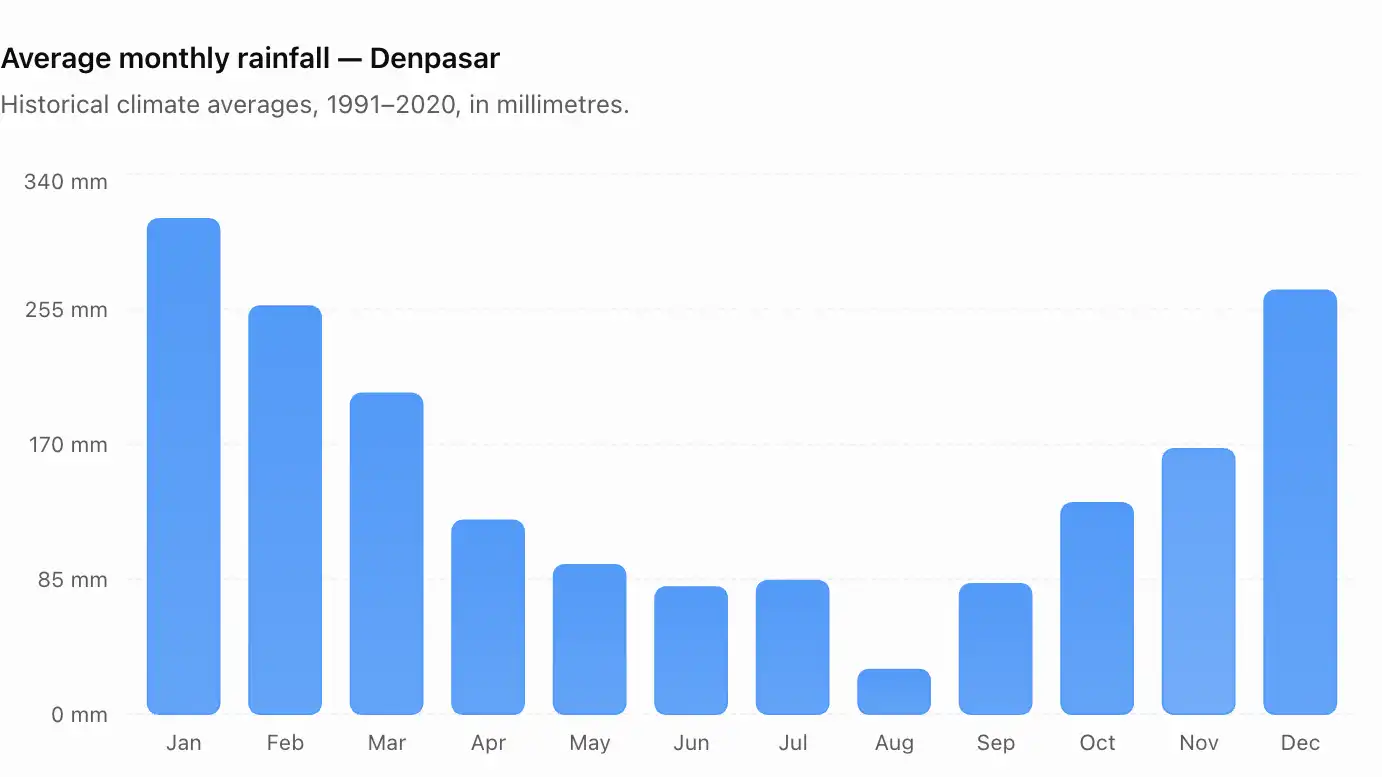
Rainfall is the most noticeable seasonal difference in Bali's climate.
During the wetter months, tropical showers and thunderstorms become more frequent. Some days bring brief but heavy rain, while others can experience prolonged wet conditions.
During the drier months, rainfall generally decreases, particularly in Bali's southern coastal region.
However, the dry season doesn't mean completely rain-free weather, and the wet season doesn't mean it rains all day, every day.
The chart below shows historical average monthly rainfall for Denpasar. It is a guide to seasonal patterns rather than a forecast for a particular holiday.
Bali remains warm throughout the year, especially in its southern coastal resort areas.
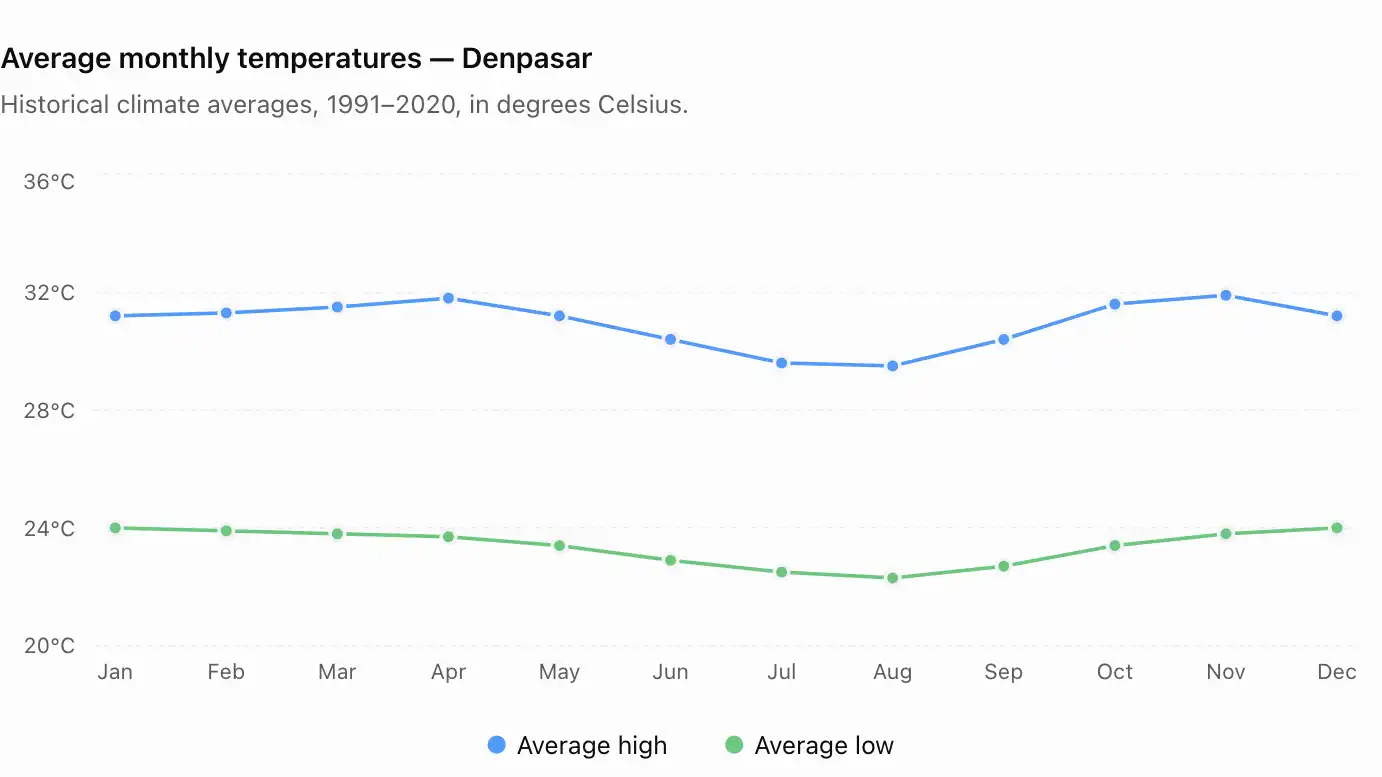
Average daytime maximum temperatures generally range from approximately 29°C to 32°C, while nights remain warm.
July and August are often slightly cooler, while October and November can feel particularly hot and humid.
However, temperature alone doesn't tell the whole story.
Humidity, cloud cover, sunshine and wind can make two days with similar temperatures feel quite different.
Inland and mountain areas can be noticeably cooler than the coast, particularly during evenings and early mornings.
Bali's Dry Season — Generally April to October
The dry season generally brings less frequent rainfall, more settled weather and somewhat lower humidity.
July, August and September are typically among the drier months in southern Bali.
However, occasional showers are still possible, particularly in inland and mountain areas.

Bali's Wet Season — Generally November to March
During the wet season, rainfall becomes more frequent and humidity generally increases.
December, January and February often experience substantial rainfall, although the timing and intensity vary from year to year.
Tropical thunderstorms can develop quickly. Some bring short, intense downpours, while others produce longer periods of rain.
Heavy rainfall can occasionally cause local flooding, traffic delays and disruption to outdoor activities.
Bali's Transitional Months
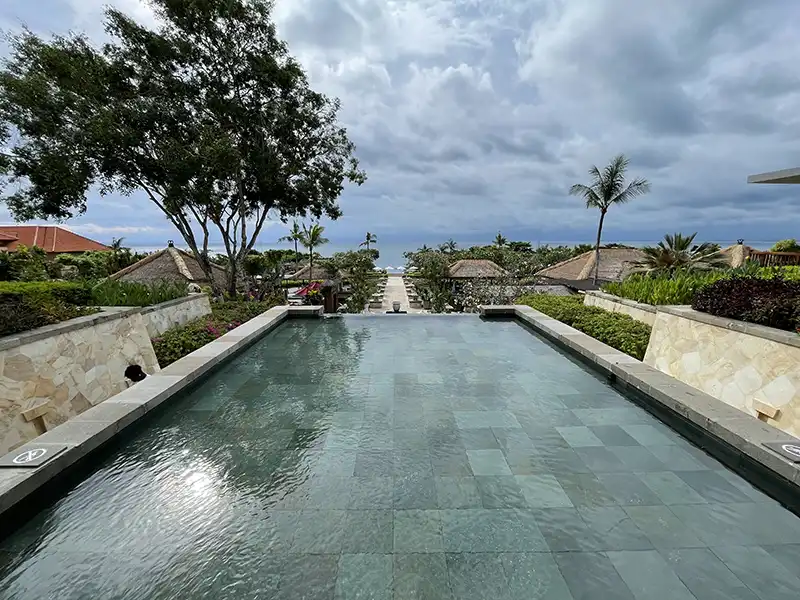
April and October are often transitional months between wetter and drier conditions.
Seasonal changes don't occur on a fixed date, and rainfall patterns can vary considerably from one year to the next.

The Cooler Highlands and Mountains of Bali
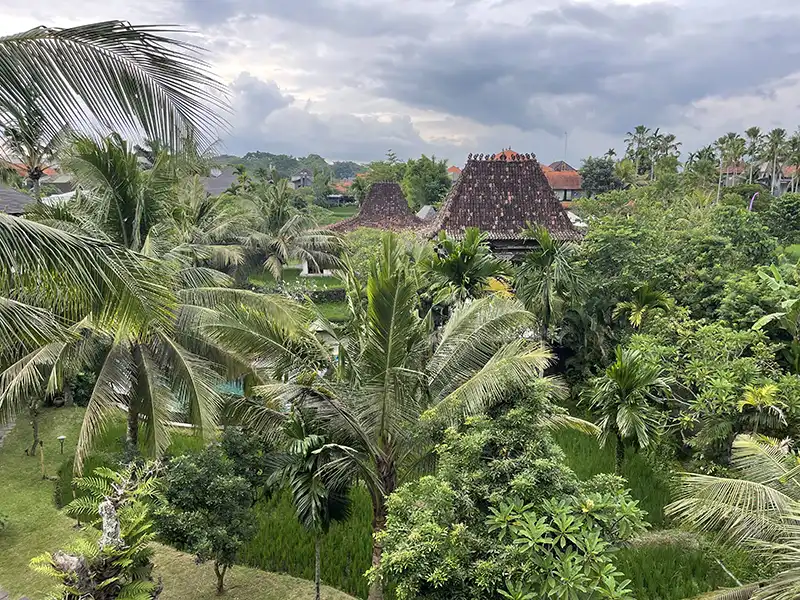
Bali attracts a lot of beach-going holiday makers, but in the central parts of the island, people are drawn to the peace and tranquility surrounding the mountains and volcanoes.
As you climb up nearly 600-900 metres from the coast line, the altitude has a cooling and comforting affect. Temperatures dip a few degrees and the humidity ebbs. Clouds rise to clear the mountains and volcanoes. Night time can bring a significant drop in temperature. Yet the thriving communities of Ubud, Batukara and Sideman never fail to draw their tourists seeking serenity, spritual enlightenment and an escape from the urban throes.
Want to know which months may suit your holiday?
Read our Best Time to Visit Bali guide for recommendations covering weather, crowds, prices and holiday activities.
How Humid Is Bali?
Bali experiences high humidity throughout the year.
During the wet season, warm temperatures combined with high moisture levels can make the air feel particularly heavy.
The drier months may feel more comfortable, especially along the coast where breezes provide some relief.
Air-conditioned accommodation, regular hydration and scheduling strenuous activities for cooler parts of the day can make a considerable difference.
Does Bali Get Sunshine During the Wet Season?
Yes. Bali can experience sunshine throughout the year, including during the wet season.
However, cloud cover and rainfall are generally more frequent during wetter months.
A forecast showing rain doesn't necessarily mean there will be no sunshine. Equally, a dry-season holiday doesn't guarantee clear skies every day.
What Are Tropical Rain Showers Like?
Tropical showers can arrive suddenly and produce heavy rainfall in a relatively short period.
Some clear quickly, while larger weather systems can bring persistent rain and thunderstorms.
If you're planning outdoor activities, boat trips or mountain excursions, check the latest local forecast and allow some flexibility.
For official Indonesian weather information, visit BMKG.
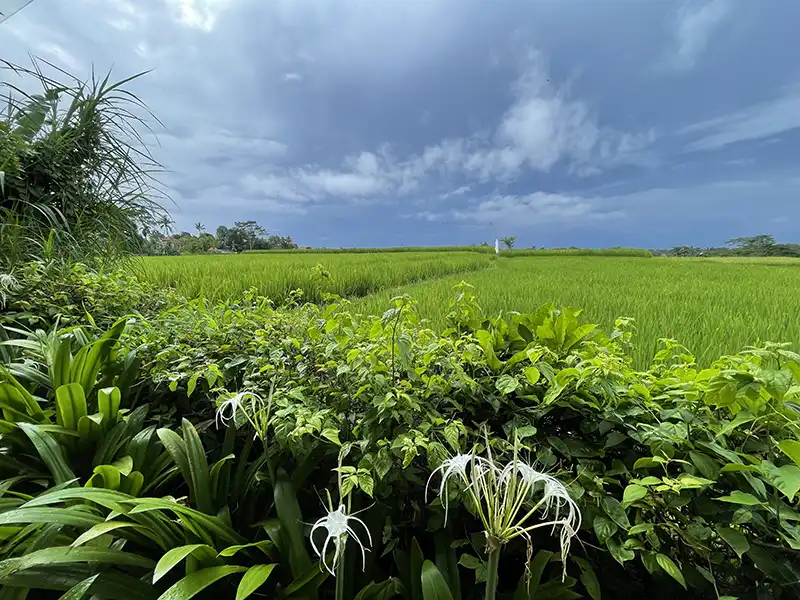
Yes it does!
Bali has several distinct local climate environments.
Elevation, mountains, prevailing winds and proximity to the coast all influence temperature, rainfall and cloud cover.
That means the weather in Ubud or Kintamani can be noticeably different from conditions at a beachfront resort in Sanur or Nusa Dua on the same day.
The following comparison describes general weather tendencies rather than guaranteeing particular conditions.
| Bali Region | Typical Weather Characteristics |
|---|---|
Seminyak, Legian & Canggu |
Warm southwest-coast weather, seasonal tropical rain and changing surf conditions. |
Sanur & Nusa Dua |
Warm coastal temperatures; beach conditions influenced by tides, reefs, winds and seasonal weather. |
Uluwatu & Jimbaran |
Warm Bukit Peninsula conditions, exposed coastal areas and local variations in wind and rainfall. |
Ubud |
Inland tropical conditions, humid valleys and variable showers; some surrounding areas are cooler than the coast. |
Kintamani & Bedugul |
Cooler mountain temperatures, cloud, mist and frequent changes in local weather. |
Amed & East Bali |
Some comparatively dry coastal landscapes, with different conditions towards the mountains. |
Lovina & North Bali |
Warm north-coast conditions, with rainfall influenced by Bali's central mountain range. |
Bali's surrounding seas remain warm throughout the year, generally around 27–30°C, although water temperatures vary by season and location.
However, warm water doesn't necessarily mean safe swimming conditions.
Wave height, currents, tides, reefs and seasonal winds can all affect the suitability of a beach for swimming, snorkelling or surfing.
West-Coast Beaches
Beaches around Seminyak, Canggu and Uluwatu can experience powerful surf and strong currents.
Conditions vary between individual beaches and throughout the year.
East- and Southeast-Coast Beaches
Sanur and parts of Nusa Dua offer more sheltered coastal environments.
However, tides, reef areas, currents and changing weather still affect swimming conditions.
Snorkelling, Diving & Boat Trips
Visibility and sea conditions vary considerably around Bali.
A calm beach on one side of the island doesn't guarantee similar conditions elsewhere.
For boat trips, snorkelling and diving, always follow experienced local operators' advice and check the latest marine forecasts.
Choose beaches according to actual conditions and your swimming ability, not simply the temperature of the water.

❖ BlueSun Insight: A Rainy Day Doesn't Mean a Ruined Day
One of the biggest mistakes travellers make when reading Bali weather charts is assuming a rainy day means rain all day.
Climate statistics can record a day as wet even when rainfall occurs during a relatively short tropical shower. You might experience sunshine, heavy rain and clear skies all on the same day.
However, Bali's wet season can also bring prolonged rainfall, thunderstorms and local flooding. There's no guarantee that a shower will disappear after an hour.
Remember that weather conditions can be very different between a coastal resort, inland Ubud and the central highlands.
Our advice: Use monthly climate averages to understand general weather patterns, but check local forecasts closer to departure and allow flexibility for outdoor activities.
For help choosing your holiday dates, read our Best Time to Visit Bali guide.
Bali's southern coastal areas generally experience daytime temperatures of approximately 29–32°C throughout the year. Inland and mountain destinations can be cooler, particularly in the evenings.
Rainfall varies significantly by month and location. Historical Denpasar averages in the dataset used here range from approximately 28 mm in August to 312 mm in January.
January is typically among the wettest months in southern Bali, although December and February can also receive substantial rainfall. The wettest month varies by year and region.
August is typically among the driest months around Denpasar. July and September also generally experience lower rainfall than the wet season.
Not necessarily. Tropical rain can arrive in short, heavy showers, but some weather systems bring prolonged rainfall. Conditions vary between different parts of the island.
Yes. Bali has a tropical climate with high humidity throughout the year. Humidity often feels more uncomfortable during the wet season.
Ubud's inland setting and surrounding hills can produce somewhat cooler and wetter conditions than some southern coastal areas. However, weather varies within the wider Ubud region.
Yes. Bali's central mountains influence rainfall, cloud cover and local weather patterns. Northern, southern, eastern and highland regions can experience different conditions on the same day.
Understanding Bali's weather can help you prepare for your holiday, but climate averages are only one part of planning a successful trip.
The destination you choose, the type of accommodation, your preferred activities and how you like to spend your days are equally important.
Would you prefer a beachfront resort in Nusa Dua? A relaxed coastal holiday in Sanur? Restaurants and shopping in Seminyak? The tropical countryside around Ubud? Or a luxury clifftop escape in Uluwatu?
BlueSun Travel can help you compare Bali destinations, choose suitable accommodation and arrange your holiday.
Useful Bali Planning Guides
- Best Time to Visit Bali — choosing your holiday dates
- Explore Bali — destinations, accommodation and travel planning
- Bali Travel Insurance — understanding travel insurance considerations
Book your Bali Holiday
1300 799 758